Editorial guide for addressing gender-based violence

Amid constant threats to the practice of journalism, multiple crises -social, economic, political and climatic- and setbacks in human rights, DW Akademie and the Salvadoran media Alharaca present a tool that strengthens the role of editors as guarantors of rigorous, critical and sensitive investigations in Latin America.
The Editorial guide for addressing violence from a gender and intersectional approach, compiled by 30 editors from independent and community media in the region, offers strategies, key questions and practical examples that address complex coverage of violence from a gender, intersectional and constructive approach.
How to avoid re-victimization and criminalization
The guide advises avoiding re-victimization and criminalization. It recommends counteracting extractivist information and incorporating diversity in editorial processes, both in the content produced and in how newsrooms function. It includes chapters on self-care and safety, as well as recommendations that address constructive narratives, resistance and social movements that take care of their audiences and their sources. Finally, it adds a proposal for a collaborative, inclusive and intersectional glossary.
This collective guide is part of the journalistic training and production project #CambiaLaHistoria, which combines the gender and intersectional perspective with constructive journalism.
Editing from an integrative perspective
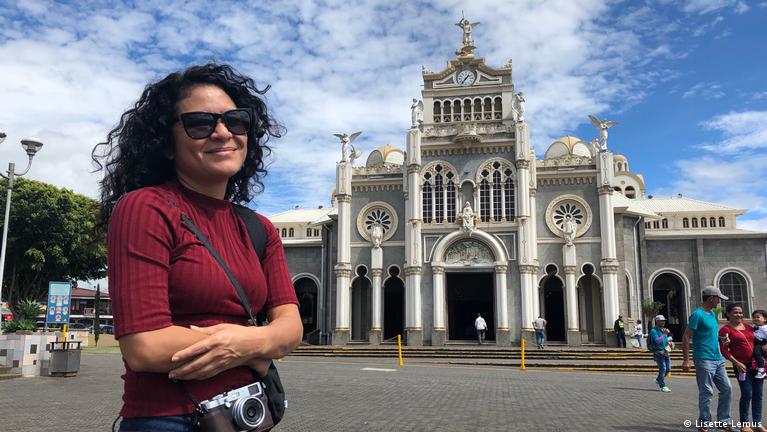
Elizabeth Otálvaro, co-director of Revista Mutante (Colombia), and editor in the third edition of #CambiaLaHistoria, helped develop this guide, and she considers it urgent "to approach the stories we tell from a historical, spatial and inequality perspective."

At the same time, she emphasizes reforming conventional journalism.
"If care is at the center of editorial work - care of the journalist, of his sources, of the story and of the audiences,” she explained, “then we are trying to make a journalism that subverts its extractivism, that transforms its hierarchical and violent practices."
Strengthening local journalism
Nathalia Salamanca Sarmiento, editorial board member at Agenda Propia, a DW Akademie partner in Colombia, also helped developguide, and this marks a before and after in her career.

"I lived the experience as an exchange of knowledge among Latin American communicators,” she said, “where good practices were shared, but also the challenges and pains we go through in the profession."
Salamanca urges both collaboration and a plural perspective. "Generating spaces for conversation between editors and publishers is fundamental,” she said. "It is a reminder of the importance of the structures that make journalism possible and of the celebration that comes from being able to continue working as a team."
This editorial guide is an invitation to rethink the editorial process with listening, respect, affection, diversity and, above all, care. It is a living transformation tool for journalism in which it matters not only what is told, but also how and from where it is told.
The guide can be downloaded below.
#CambiaLaHistoria, a joint project of DW Akademie and Alharaca, has been supported by Germany’s Federal Foreign Office since 2021.