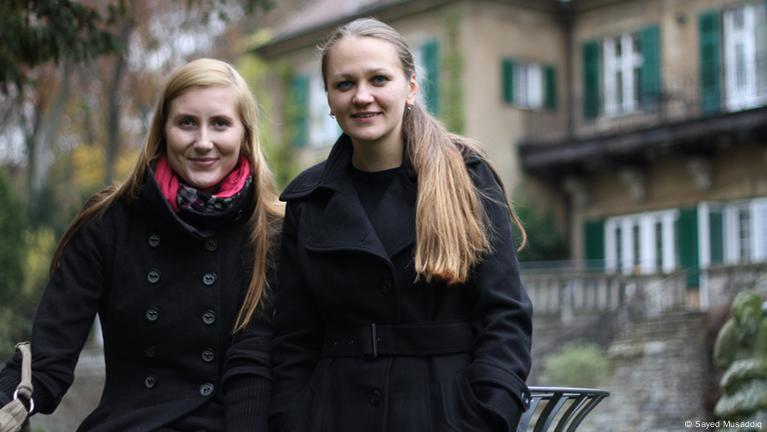
"The IMS was truly a game-changer"

DW Akademie: Why did you choose to become part of the IMS program?
Auleria Gabriel Palali: As a multi-award-winning journalist who experienced the power of media in shaping narratives, influencing public opinion and driving social change, I wanted to find a space that would not only nurture my professional growth but also expand my knowledge from an international perspective. The International Media Studies (IMS) program offered exactly that.
I saw IMS as a unique opportunity to immerse myself in global media practices, engage with diverse cultures and refine my journalistic skills in a rapidly evolving media landscape. The program's interdisciplinary approach, combining media theory, practical journalism, and development communication, aligned perfectly with my career goals.
What also attracted me was the chance to learn in a multicultural environment, surrounded by classmates and professors from around the world. This global exchange of ideas and perspectives was invaluable to me, both personally and professionally.
Which career path have you taken since graduating from the International Media Studies program?
Pursuing my Master’s degree in International Media Studies (IMS) was truly a game-changer in my career. I left a full-time job to join the program, a decision I have never regretted. I entered IMS with a strong background and passion for radio production, a field I had been dedicated to for over eight years. However, I didn’t anticipate just how much the program would help me discover a new version of myself. Through the practical classes, I developed a deep interest in television production, an area I had always been curious about but didn’t know how to break into.
Now, I work as a Senior News Producer at Azam TV, part of one of Tanzania’s leading media houses, Azam Media Limited. My transition from radio journalism to television is more than just a career shift, it’s a personal evolution. I carry both parts of my journey with pride.
Which of the skills that you acquired during the IMS program are you now applying to your work?
One of the most valuable skills I gained during the IMS program was through the Comparative Media Studies class, which deepened my understanding of how different media systems function across countries and regions. This perspective has been especially helpful in analyzing news coverage, understanding diverse audience expectations and recognizing how political, cultural and regulatory factors shape media practices.
In my current role, I often draw on this knowledge when making editorial decisions or evaluating how we frame stories. It helps me reflect critically on the content we produce, ensuring that it meets both professional standards and the specific needs of our audience.
What were some of the other highlights for you?
Academically, I was exposed to a broad range of subjects from media theory and journalism ethics to development communication and digital innovation. These courses challenged me to think critically about the role of media in society and helped me strengthen both my research and analytical skills.
I also gained valuable technical abilities and developed a more creative and flexible approach to storytelling through our practical sessions in television production and mobile journalism. I also got the chance to connect with DW Kiswahili, a service I had listened to on the radio from afar for many years. As a native Kiswahili speaker, it was incredibly meaningful to go from being a listener to engaging with DW Kiswahili directly, learning from their team and seeing how professional journalism is practiced in my own language at an international level.
Socially, the program offered rich intercultural experiences. In addition to learning the German language and gaining insights into German culture, studying alongside classmates from around the world taught me how to collaborate across cultures, appreciate diverse viewpoints and communicate more effectively in a global media environment. These experiences enhanced my adaptability, empathy, and confidence – qualities that continue to support me in my professional life.
Do you have any advice for future IMS students and graduates?
I would say make the most of every opportunity the program offers, both inside and outside the classroom. The IMS program is not just about academic learning, it’s a unique opportunity to grow personally, professionally and culturally. Don’t be afraid to step out of your comfort zone, whether it’s learning a new form of media production, participating in intercultural discussions or presenting your ideas in front of others. These are the experiences that shape your confidence and prepare you for the real-world challenges of the media industry.
Most importantly, stay open-minded and curious! Be proud to be part of the IMS community, a place that will challenge you, empower you and prepare you to be a media professional who can make a real impact across borders.