IMS and H-BRS students debate future of global media systems

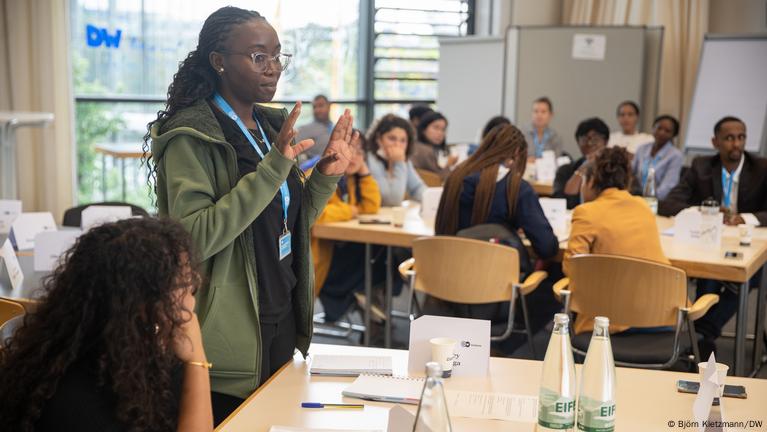
On November 27th, DW Akademie in Bonn hosted a joint seminar on "Comparative Media Systems," bringing together students from the International Media Studies (IMS) from DW Akademie and Digital Communication and Media Innovation (DKM) programs from Bonn-Rhein-Sieg University of Applied Sciences.
Approximately 50 students with over 20 different nationalities attended the seminar that aimed at promoting critical thinking and cross-cultural understanding of the complex challenges media is facing in the digital age.
It was designed to be both innovative and creative, moving beyond traditional student-centred learning toward a fully student-led model. The planning, organization, and facilitation were carried out independently by eight student facilitators who guided discussions, posed relevant questions, and led the participants through the various phases of the afternoon. Prof. Dr. Christoph Schmidt, the Comparative Media Systems lecturer, merely provided guidance and acted as a coach for the facilitators during the process.
Emphasis on need for nuance and collaboration
The comparative approach was central to the afternoon’s agenda, which featured presentations exploring the media landscapes of Germany and Pakistan. The presentations generated insights and highlighted structural similarities and critical pain points in both nations, which forced participants to critically reassess their future roles as communicators and journalists.
The academic discussions emphasized the need to avoid viewing media systems independently, highlighting that effective solutions must be collaborative, nuanced, and culturally sensitive.

Resilient media and audiences
During the key takeaways session, students focused on the foundational components necessary for resilient media, concluding that robust regulation and press freedom are essential pillars for a healthy democracy. They agreed that an informed and diverse media system is non-negotiable for political stability and civic engagement.
The debate then turned to the dominance of global tech players in a lively fishbowl discussion on the topic: "If large technology companies control most of our attention, are we still responsible for our own minds - or are we merely objects of digital colonization?" While students held diverse perspectives, the consensus was clear: despite the pervasive impact of media on daily life, individuals must remain aware of its influence and are ultimately responsible for their own choices and actions following media consumption.

Interactive and intercultural exchange
To ensure engagement and facilitate cross-program networking, the seminar featured several dynamic and playful activities. The participants particularly enjoyed the "Riddle Emoji" game , which used visual puzzles to explore key academic concepts related to media systems such as propaganda, gatekeeping, and the watchdog.
IMS and DKM students were mixed in all group work and activities, ensuring that every participant had a multicultural and diverse experience. This focus on joint activity and discussion was key to motivating the students and enhancing the spirit of collaboration, successfully reinforcing the seminar's core objective of cross-cultural academic exchange.
The joint seminar concluded with a clear consensus on the complexity of contemporary media systems and the absolute necessity for future media professionals to approach global challenges with a comparative, critical, and collaborative mindset.
Author: Duzka Zhare Ortiz Pacori