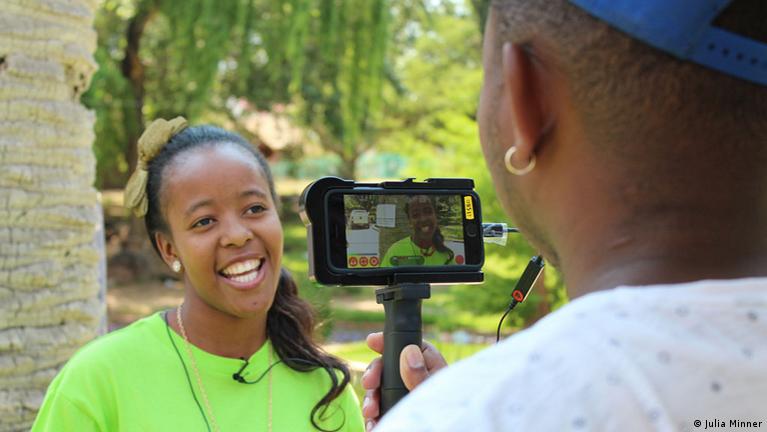
Namibia: Transparency and public engagement in green economy

“Namibia has an abundance of natural resources and precious ecosystems that need protection,” said Peter Limbourg, Director General of Germany’s international broadcaster Deutsche Welle (DW), at the project’s launch event on March 27 in Windhoek. But it also faces the effects of climate change and the question of how all Namibians can benefit from its natural wealth. Unbiased news and reliable facts are the basis for informed decisions. But this project goes beyond facts. This project listens to different perspectives – from communities, business leaders, policy makers and government. It is important to have this dialogue to ensure that every voice is heard.”

Running from 2025 to 2027, the Eco Dialogue Collective is jointly implemented by DW Akademie, NMT Media Foundation, the Institute for Public Policy Research (IPPR), and the Legal Assistance Centre (LAC). The project is funded by the European Union and the Federal Ministry for Economic Cooperation and Development.
By strengthening media and civil society, the Eco Dialogue Collective will enhance access to information, amplify voices in affected communities and support inclusive decision-making in the era of green transformation. The Eco Dialogue Collective aims to ensure that Namibia’s green economy and extractive industries are developed in a way that is inclusive, transparent and sustainable.
Empowering journalists, civil society actors and communities
Ian Dupont, Delegation of the European Union to Namibia, emphasized: “CSOs and media are indispensable to democratic governance and sustainable development. They bridge societal divides, amplify marginalized voices and provide critical oversight that fosters transparency and accountability. The European Union deeply values this role and remains committed to supporting initiatives that strengthen civic engagement, human rights and environmental justice.”

Zoé Titus, Executive Director of the NMT Media Foundation, added: “This project recognizes that quality, public interest journalism is not a luxury; it is an essential public good. When communities have access to accurate, engaging and relevant information, they are better able to participate in shaping the policies that affect their land, livelihoods and futures.”
The project integrates three core components:
Content Production
A collaborative newsroom will be established to promote high-quality, explanatory, and constructive journalism on green growth, extractive industries, and environmental issues. The Eco Newsroom supports individual journalists, content producers, community radios, and media houses. Special features include a youth-led section, a community-centered program, and a decision-maker portal that will make reliable information accessible to different audiences.
Dialogue and Advocacy
Community dialogues, workshops, and conferences across Namibia will encourage open discussion and exchange between communities, leaders, and policymakers. The goal is to foster democratic participation and give voice to local perspectives on Namibia’s development path.
Training and Capacity Building
A training program will build the skills of journalists, civil society actors, and community advocates. Trainees will gain tools to analyze and explain green economy projects, practice evidence-based advocacy, and use media formats to communicate environmental and energy policy issues to the public.
About DW Akademie
DW Akademie is Deutsche Welle’s center for international media development, journalistic training and knowledge transfer. Our projects strengthen the human right to freedom of expression and unhindered access to information. DW Akademie empowers people worldwide to make independent decisions based on reliable facts and constructive dialogue. DW Akademie is a strategic partner of the German Federal Ministry for Economic Cooperation and Development. We also receive funding from the Federal Foreign Office and the European Union and are active in around 70 developing and emerging economies.