DW Akademie in Uzbekistan

Uzbekistan has long been a valued DW Akademie partner in Central Asia. While citizens have increasing access to information, the media landscape still faces significant challenges. Under-resourced journalism, politically influenced content and cases of hate speech complicate efforts to ensure a well-informed public.
In its 2025 World Press Freedom Index,Reporters Without Borders ranked Uzbekistan 148th out of 180 countries, reflecting ongoing concerns about media freedom. Access to some websites and social media platforms remains restricted and media professionals, especially independent voices, can encounter legal pressures when reporting on sensitive topics.
Our activities
DW Akademie is implementing three projects in Uzbekistan that are financed by Germany’s Ministry of Economic Cooperation and Development (BMZ), and a three-year EU-funded program on media and gender.
Download our evaluation reports below.
The Media School Uzbekistan is a capacity-building program for media managers and journalists, and has a digital focus. The project also includes establishing an alumni network.
In terms of professional media, DW Akademie connects journalism trainers and consultants from Uzbekistan, Mongolia, Pakistan, Bangladesh and elsewhere in Asia. The network is part of our "Journalism of the Future" program and focuses on media viability, user engagement, innovation and advocacy.
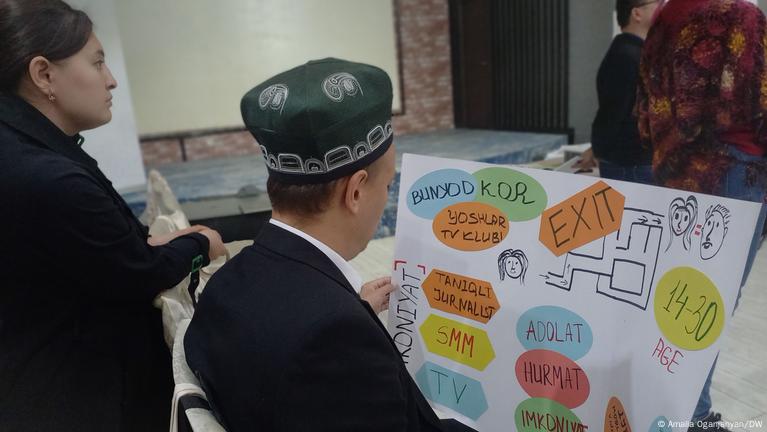
The third BMZ-funded project focuses on Media and Information Literacy (MIL). DW Akademie is adapting MIL concepts and tools developed in other parts of the world for use in Uzbekistan, Mongolia and Kyrgyzstan. This includes creating an online library of MIL materials for local partners and stakeholders. In addition, DW Akademie and its partners are developing a multi-lingual MIL learning app to reach citizens in the countries’ rural regions.
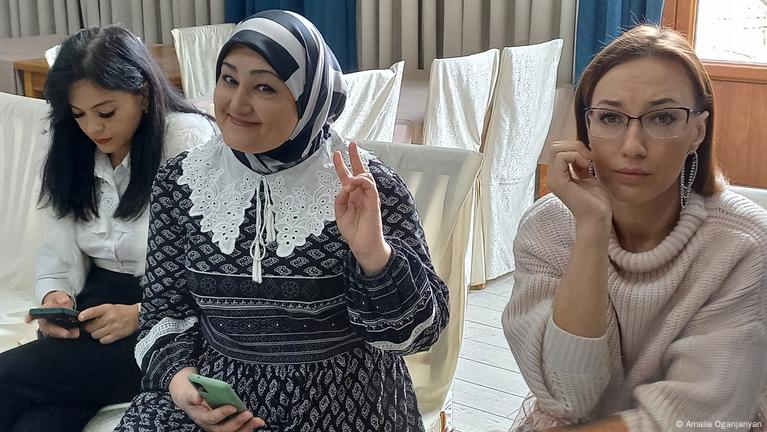
DW Akademie’s three-year EU-funded project "Tabassum: Media Skills to Promote Gender Equality and Empower Young Women in Uzbekistan" involves journalists, bloggers, youth and women’s civic society organizations (CSOs). The focus is on gender constructive reporting, media campaigning and combatting gender disinformation, with an aim to empower women and youth and to strengthen gender equality. Another goal is to promote ideas and actions of youth and women in Uzbek media and support them in becoming part of the public discourse.
Funding: Federal Ministry for Economic Cooperation and Development (BMZ), European Union (EU)
Program Director Journalism of the Future: Karin Schädler
Program Director Digital Resilience: Andreas Grigo
Locations: Tashkent and various regions of Uzbekistan
Local partner: Modern Journalism Development Center
Focus: Media and Information Literacy, digital literacy, gendered (or gender-based) disinformation, gender equality, gender-sensitive constructive reporting, media management, journalism education