DW Akademie in Brazil

Communities in northern Brazil are far from large urban centers and often isolated, severely limiting their ability to participate in political processes that directly concern and affect them. They also miss out on important economic opportunities, unable to offer their local products to wider markets.
Their isolation is closely linked to a lack of connectivity. Internet access in the area is marked by poor connection quality, limited coverage and exorbitant prices. Much of the region has no connection at all and, where it does exist, is slow and unstable.
This in turn leads to a scarcity of reliable information and difficulties for people to validate rumors or dubious news. Inhabitants of the Amazon region also have fewer opportunities to express themselves in the media, participate in public life and fully exercise their civil rights.
Our activities
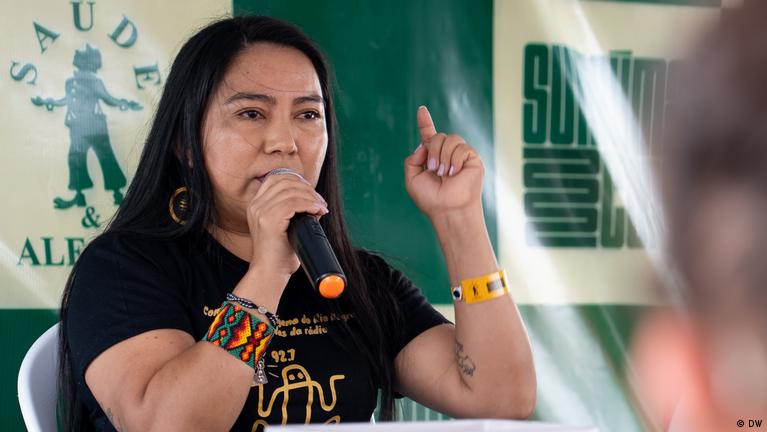
In response, DW Akademie and its local partner Saúde e Alegriaare implementing the Floresta Digital project so that Brazil’s Amazonian communities can connect to the Internet in a self-governed, sustainable way. Participants will also create interconnected digital spaces, enabling them to present their local production and handicraft initiatives, and this way support their communities economically while preserving the Amazon rainforest.
In keeping with EU objectives for digital participationand media viability, Floresta Digital aims to create a regional media ecosystem, integrating journalists as mentors and trainers and targeting vulnerable groups such as indigenous peoples, Afro-Brazilian quilombos and riverine communities.
In its effort to promote environmental journalism in the Amazon region, DW Akademie is also running the Get Ready for the COP initiative, training community and local journalists and communicators to cover international climate negotiations.
Funding: European Union
Program Director: Nils Brock
Local partner: Saúde e Alegria
Focus: Access to technology, environmental communication and journalism, advocacy, technological sovereignty, access to information, participation of socially disadvantaged groups, local and participatory media formats, community media, journalism training, intercultural and indigenous communication, cross-cultural and cross-field collaboration