Asia’s podcasters are transforming how audiences tune in

When Singaporean podcast producer Guang Jin Yeo started his true-crime audio series, he quickly discovered that Southeast Asian audiences wanted more than an audio experience. As he told us in an interview for this issue of the PodCircle, whenever he'd talk about his podcast, he'd always get the same question: "What’s the YouTube link?"
"In Asia, it's common for people to assume that podcasts also mean video," Yeo says. This expectation has driven independent creators to go beyond the mic – incorporating studio video, animations, and short reels and shorts into their podcast productions – reshaping how podcasting looks in Asia.
In the past few years, Southeast Asia's indie podcasters have increasingly turned to cameras and graphics to engage their audiences. Yeo's own company, 1UpMedia, provides a telling case study. Initially audio-focused, 1UpMedia found itself pushed into the video space to meet audience demand.
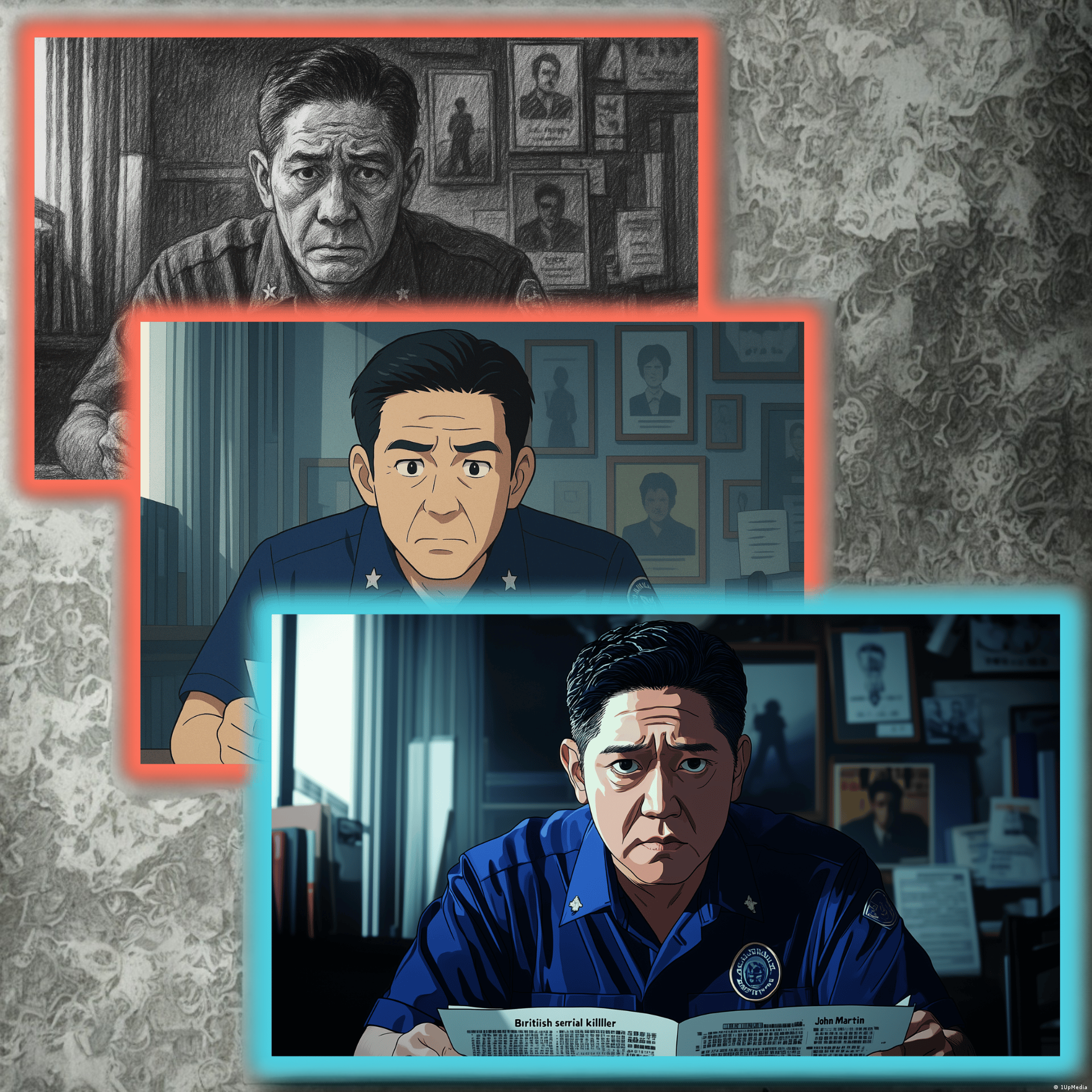
The team experimented with ways to make a narrative podcast visual, and after some hits and probably more misses, they debuted a fully animated, documentary-style video version of their true-crime show. The results were striking. In six months, their new YouTube channel racked up over 250,000 monthly views, 52,000 watch hours and 12,000 new subscribers. It also breathed new life into older audio episodes. The success showed them how adding visuals could expand a podcast’s reach on video platforms.
Yeo, a former media analyst turned podcast producer, notes that in Southeast Asia, YouTube is the default podcast platform. Indonesia is a prime example: it’s one of the world’s biggest YouTube markets (143 million users in early 2025, according to DataReportal) and ranks among the top countries for podcast listening.
Many hit Indonesian "podcasts" are essentially YouTube talk shows. The most famous, Deddy Corbuzier’s Close The Door show, with more than 23 million subscribers, films candid interviews with celebrities and politicians in a studio decked out with microphones and a giant on-screen logo. The channel draws a huge audience – at one point reaching 91 million views in a month – making Corbuzier arguably the Joe Rogan of Indonesia. But he’s not outlier: from Bangkok to Manila, viewers are tuning in to watch podcast hosts banter on camera.
Livestreams, Animation and TikTok: New Formats Emerge
The visual pivot isn’t limited to static in-studio videos. Southeast Asian podcasters are experimenting with new formats, mixing media in innovative ways. 1UpMedia's animated true-crime episodes are one such experiment – essentially mini documentary films set to podcast narration.
Other indie shows have tried livestreaming their recordings on Facebook or YouTube Live, letting fans watch (and comment) in real time as hosts chat. In Vietnam and Thailand, some creators host live podcast sessions on social media, blurring the line between podcast and an interactive vlog.
Increasingly, short-form video is part of the podcast playbook. To hook younger audiences, creators are slicing their episodes into 60-second vertical clips with subtitles, optimized for TikTok, Instagram Reels and YouTube Shorts. These snappy excerpts serve as trailers that travel through social feeds, a growth tactic that seems to be working. An estimated 76% of Gen Z listeners discover new shows via short-form social videos.
"If you're not cutting vertical clips for Reels and TikTok, you're invisible to Gen Z," notes an April report by Edison Research, which urges "invest in short-form podcast clips for social discovery." In Southeast Asia, where half the population is under 30, this advice resonates. Many podcasters now design content with viral video moments in mind – a funny exchange or emotional reaction that can be turned into a trending clip on TikTok.
Why visuals matter more in Asia
Several things have made visuals especially critical in the Asian podcast market. One is the leapfrogging effect. Much of Asia's podcast growth happened at the same time as the rise of video streaming and social media. Unlike in the West where different content types came in waves, in many Asian markets everything arrived at once.
Podcasts didn't have a long head start as a purely audio medium. Instead, they emerged in an ecosystem already dominated by YouTube, Facebook video and now TikTok. With no notion that a "real" podcast must be audio-only, Asian creators and listeners were open to whatever format worked. In many local languages, there wasn’t even a word for "podcast" until recently – so the concept was free to be defined on the fly.

Then there's the matter of trust and personal connection. In cultures where personal relationships and seeing eye-to-eye are valued, having a visual of the host can enhance credibility. Viewers enjoy observing the host’s expressions and the rapport between co-hosts or guests. Even globally, surveys show that 51% of podcast listeners say seeing the hosts' facial expressions and reactions adds to their enjoyment, and 50% say video helps them focus on the conversation, according to marketing firm WARC, active in Singapore and China.
What’s happening out West?
Meanwhile, in the United States and Europe, podcasting has also been undergoing a visual transformation, with heated debate about what really counts as a podcast. On one hand, the numbers make it clear that video has become a huge part of Western podcast consumption. YouTube is now the single largest podcast platform in the US, according to multiple studies.
Yet this shift doesn't sit well with many.
Podcasting was born as an audio-first medium and for purists, the magic of podcasts lies in audio’s intimacy – the idea that a listener’s imagination fills in the visuals. Some longtime podcast fans and creators worry that the rush to video could undermine that intimacy or turn podcasts into something else entirely (essentially, talk shows or badly done video docs).
But these days, the majority of consumers no longer mind video in their podcasts. A US survey by Coleman Insights in 2023 showed that 75% of podcast consumers define a podcast as "audio-only or available with video," whereas only 22% insist it must be "audio-only." In other words, three in four listeners are fine calling a YouTube show a podcast, which indicates that the medium's definition has been evolving for a while now.
Beyond the mic
From Southeast Asia’s video-first podcast approach to the West’s ongoing debate, one thing is clear: the podcasting experience is no longer confined to ears only. Many creators see this evolution as inevitable and exciting, enabling them to reach people who might never click on an audio-only file. They're also future-proofing content in an attention economy that increasingly favors video snippets, despite the dismay of purists.
Ultimately, advocates of visuals in podcasting might say: a good story is a good story, whether you listen to it, watch it or both – the same content is just now available in the format the audience member prefers.
So podcasting's evolution continues, and Asia's visual-first innovators may well provide a roadmap for the rest of the world, showing how to keep podcasting relevant, accessible and entertaining in an era where screens are never far from our eyes, or our ears.