Does international media development meet OECD standards?

In 2024, the Organisation for Co-operation and Development (OECD) published principles for relevant and effective support of media and the information environment.
This milestone was accompanied by intensive consultations by the umbrella organization "Global Forum for Media Development" (GFMD) and the "Center for International Media Assistance."
But how well is the media development cooperation sector fulfilling these principles? Where is it making important contributions? And where are improvements needed?
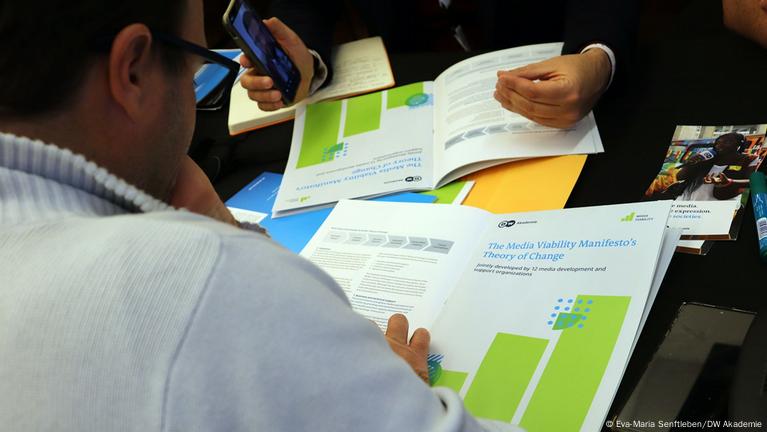
DW Freedom has taken a closer look. Its comprehensive study is based on interviews with 76 experts from around the world, and an online survey sent to all 203 GMFD organizations and partner organizations of the eleven largest international media development organizations. Researchers from different regions in the world were involved in collecting the data between December 2024 and February 2025. The study offers development cooperations and donors recommendations for improved practice.
Most important insights
The study states that media development cooperation is well positioned in several areas, including risk analyses and empowering marginalized groups. It also shows that media development cooperation organizations now rely more frequently on local expertise in their work than on "parachuting in" international experts. Two thirds of the local and regional organizations surveyed state they feel meaningfully involved in implementing projects.
However, the report also identifies areas for improvement:
- Financial support: More than 80 percent of the media development organizations surveyed maintain that more funding is needed for the promotion of independent media.
- Administrative strain: Only 33 percent of respondents believe that donors provide efficient methods for managing funds. A pressing need exists to coordinate reporting requirements and, depending on the context, to make them more flexible.
- Coordination: 70 percent of respondents state that media development lacks rapid coordination in times of crisis.
- Analysis of the media and information environment: Interviews show that while the media development coordination sector has great strengths in research and analysis, there are at times deficits in implementing knowledge gained in practice.
Media development at a critical point
The data was collected prior to and at the beginning of US President Donald Trump’s second term of office. The new Administration’s decision to abruptly freeze foreign aid was a heavy blow to the international media cooperation sector and independent media in the Global South. The report takes this into account in the foreword by Carsten von Nahmen, DW Akademie’s Managing Director, and the introduction by Nick Benequista, Senior Director of the Center for International Media Assistance. It is also acknowledged in interviews with regional experts.
Media development is currently in an exceedingly difficult phase, but OECD’s principles remind us that panic gives bad advice. An appeal by leading media development organizations, including DW Akademie, calls for increased support by other or new funders, saying this is more important than ever. New donors and actors are also urged to comply with the OECD principles. The report's recommendations provide valuable pointers in this regard.