AI Copyright laws: "We need more voices in the movement"

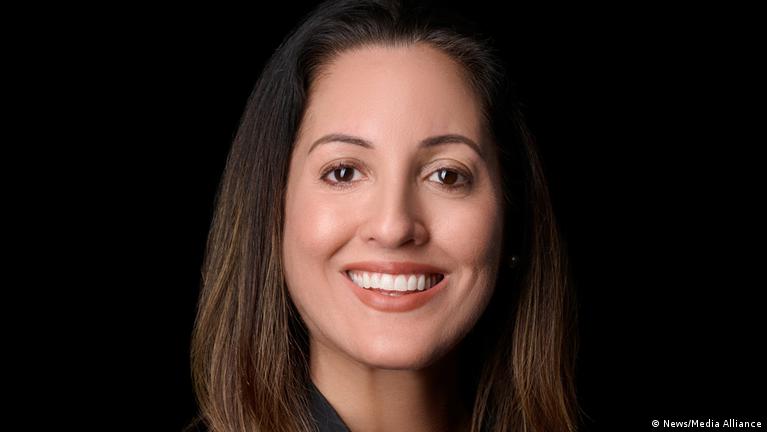
The Media Institute of Southern Africa (MISA) is closely monitoring the AI policy landscape in Southern Africa and regularly publishes analyses and policy briefs. DW Freedom recently spoke with Helen Sithole, MISA Zimbabwe’s Legal and ICT Policy Officer, about how current copyright law needs to be adjusted to protect journalism from exploitation by AI companies.
DW Freedom: AI companies are increasingly scraping journalistic content to train their technologies. What is your view on this issue?
Helen Sithole: I think this is becoming a significant issue in Southern Africa. MISA recently produced a report on AI in Southern Africa and as part of our advocacy strategy we engaged with the Zimbabwean Ministry of Information Communication Technology.
The report outlines how these new technologies will influence our legislation. For instance, our current copyright law, the Copyright and Neighboring Rights Act, is still rooted in the analog era. Large sections of it have not been updated to address the digital age. The last amendment was in 2004, which is problematic because the landscape has drastically changed since then.
What are the most pressing questions when it comes to AI regulation in your view?
There needs to be special attention in defining copyright in light of AI, because there are whole new perspectives to look at.
Are we going to grant AI a legal personality and thus liability? If not, will the end user be held accountable and liable at the end of the day? This necessitates a revision of our copyright laws, a crucial aspect many African countries overlook when pushing for AI regulation.
Some news organizations with an online presence have started copyrighting their photos, images, and written content, highlighting that it is not permitted to copy and paste them into a document. They use tools to ensure that any use of their content gives due recognition to the media house, which is a positive step. However, this needs to be formalized within our legislation as well.
What do you think is needed to successfully advocate for a revision of copyright laws to protect the original works of journalists, writers or musicians?
We need to forge alliances and build collaborations with other stakeholders because, in lobbying and advocacy, numbers matter. We are addressing an ill that has been happening for such a long time. So, for people to recognize the need for change, we need more voices in the movement.
If we are talking about big tech and large corporations, the best approach is as a regional entity, leveraging our collective strength. Copyright laws vary by territory, but big tech has essentially cut out borders. Our copyright instruments have not yet adapted to this reality.
To bring our copyright legislation up to speed, we need amendments that speak to the non-territorial nature of big tech. When bilateral agreements play a role, the government must buy in, as they understand the parameters of these agreements.
We must approach big tech not just as a small nation like Zimbabwe, but with the strength of numbers. MISA has an advantage with its eight national chapters.
We can start a movement in Zimbabwe and collaborate with our chapters in Zambia, Mozambique, Botswana, and Lesotho to garner enough support for such policies.
Who is MISA currently reaching out to as part of its advocacy efforts?
First of all, we started capacitation workshops because we realized that while AI is a big buzzword, the average person on the street doesn’t fully understand what AI is or how it will affect their profession.
We’ve conducted workshops in five cities across the country, engaging with various stakeholders. Our main target was journalists, explaining to them the legal implications of AI, its impact on our freedoms, and the necessity of regulation.
We’ve also engaged with our policymakers and the Ministry of ICT. They seem quite willing to come to the table and listen to us. During our discussions on the national AI policy, they were open to hearing our recommendations and informed us that they have taken note of them and will try to incorporate them into the policy.
When the policy is released, we’ll see how much of our input was included. I’d say there is reason to hope.
Interview: Ines Drefs
DW Freedom is the media development think tank at DW Akademie. It invests in research, builds networks, and advocates for free and open media systems across the globe. “Financing of Journalism” is one of DW Freedom’s thematic focus areas. Addressing the financial challenges faced by journalism, DW Freedom advocates for fair compensation for news publishers.