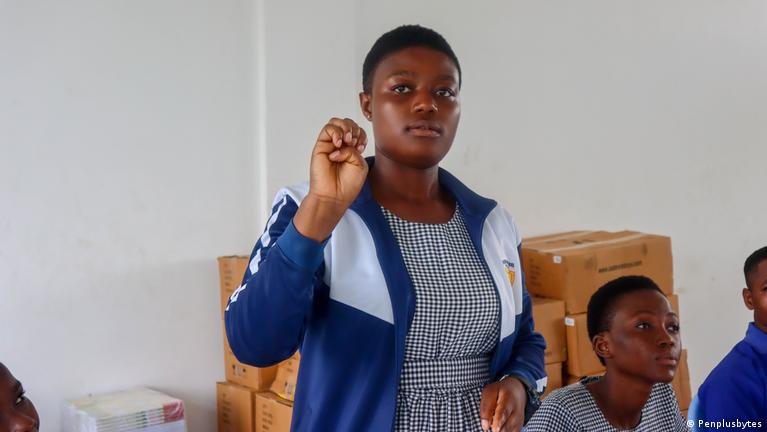
An inclusive project for Mongolian civil society

"We are all the same in one respect - deaf and hearing people," said Unurchuluun Mashbat. "We are quickly captivated by bad news. We hardly notice good information."
Mashbat is deaf and works as a video editor for the non-governmental organization Deaf Education, which teaches Mongolian sign language and advocates for the rights and greater visibility of deaf and hearing-impaired people. He participates in the "Voices for Change" project from the Media Council of Mongolia and DW Akademie.
Reaching people with reliable information is one of the goals of the EU-funded project. "Voices for Change" also aims to strengthen Mongolian civil society by making CSOs more resilient, efficient and successful.
Regaining trust
Currently, few of the organizations are economically viable. There is also lack of trust and support from the general population. At the same time, the government is trying to achieve greater transparency from CSOs through stricter laws.
"Voices for Change" approaches these challenges through a blend of media training and network meetings, among other initiatives. At the training events, participating civil society representatives learn how to report on their work both professionally and effectively - especially on social media and through collaboration with the media. To build public trust, organizations must learn how to provide open, honest and professional information about their work and goals. The premise: in a functioning democracy, a robust civil society is essential.
"My experiences in this society are negative"
Among the participants are representatives of organizations that work for people with disabilities.

People with disabilities in Mongolia are far from experiencing the social participation they deserve. According to the United Nations, for example, 36% of children with disabilities had no access to education in 2023 - with serious consequences for their future prospects.
Discrimination is also part of everyday life for Mashbat. "From going to the doctor to dealing with the authorities, my experiences in this society are negative," he said.
At the "Voices of Change" event, sign language interpreters translated for every workshop. "The hearing participants had to adjust to this situation at first, but they were accommodating," Mashbat explained.
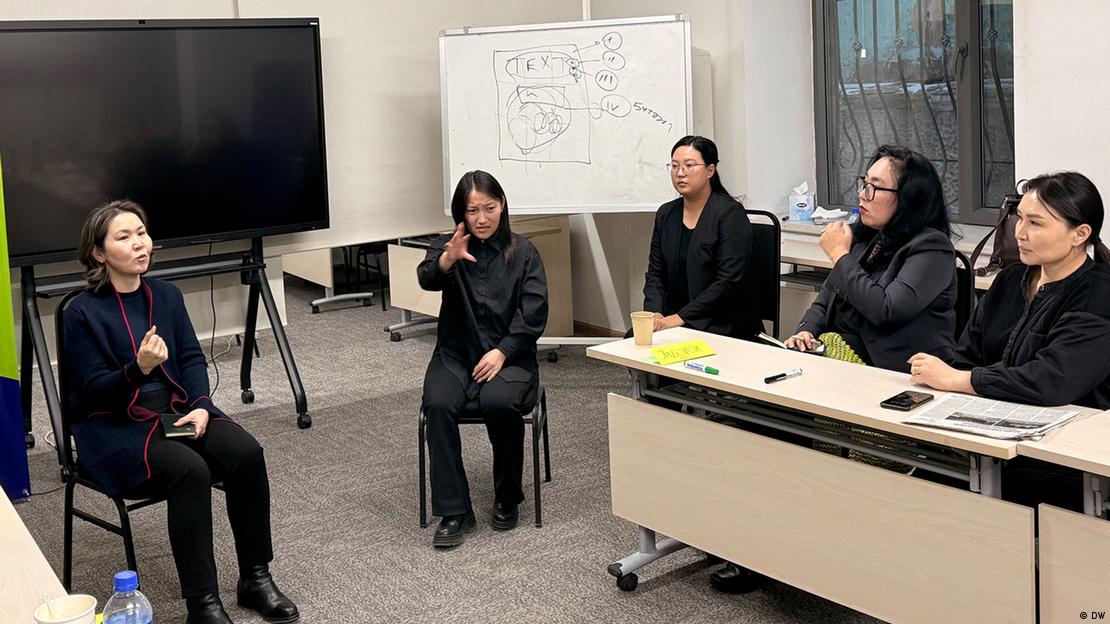
For participant Elberel Davaa, the concept of inclusivity took on new meaning during the workshops. "I work in an NGO and am committed to human rights, equality, understanding and acceptance - and yet I had no idea how I should behave," Davaa said. "I had never been in a training room with a disabled person before. That opened my eyes."
Finding ways to work together
Davaa was motivated to take part by the fact that she wanted to learn more about professional collaboration with the media. "I think I speak for many organizations when I say that we lack capacity and knowledge."
Mashbat sees an additional problem. "We deaf people are always at the back of the queue when it comes to access to information," he said. "We are dependent. We rely on the capacities and skills of the people around us."
Davaa, who works as a project manager at the Mongolian Center for Voter Education, has also become clearer about how important it is for the majority of society to see and consider the concerns of disabled people.
"It is also my responsibility to include [people with disabilities]," Davaa said, "If I want to achieve equal communication, participation and cooperation."